All Categories
Featured
Navigating Local Profile Management for Success
Table of Contents
POP uses a US-patented ranking element scoring system to identify the most crucial things to optimize on a page for better rankings and more traffic. It offers data-driven insights to improve optimization by revealing the exact positioning on a page for keywords, keyword variations, LSI terms, word count range, header tags, and schema.
It has a Chrome extension that syncs with the POP represent faster processing and more accurate place results. The extension likewise allows users to open POP suggestions while modifying pages within their Page Contractor or CMS. The Google Search Place Changer extension empowers you to easily switch your browsing place on Google.
the GS Area Changer (GS for Google Browse) web browser plugin allows users to imitate any location on Google. It can be utilized to: Search Google by particular places and languages, Gain access to geo-restricted content, Increase personal privacy, Test and establish location-based features, and Bypass regional web limitations.
Small company owners use a lot of hats. When it concerns SEO, the right tools make the distinction in between costs hours thinking what works and in fact seeing results. The best SEO tools for little businesses help simplify strategy, conserve time, and enhance exposure without requiring a marketing degree or an enormous budget plan.
For businesses competing versus bigger brands, smart use of small company SEO tools ends up being the real equalizer. The right stack exposes what works, recognizes chances rivals miss, and turns SEO from frustrating into workable. 68% of all online experiences begin with a search engine which implies for a lot of companies, natural search is where customers begin their journey.
Our Advanced 2026 Local SEO Checklist
When examining the best SEO tools for small companies, these aspects matter most: Reduce of use and finding out curve. Complex business tools waste time. The very best tools provide worth quickly without needing certification courses or a devoted SEO hire. Worth for spending plan. Free tools can provide real outcomes. Paid tools require to validate their expense with functions that straight effect income.
Local SEO matters for brick-and-mortar services. E-commerce requires item page optimization. Service providers require content that ranks for high-intent queries. Scalability. Tools that work when you have 10 pages need to still operate at 100. Beginning with platforms that grow with your organization prevents pricey migrations later on. Information quality. Cheap tools often supply undependable keyword information or out-of-date backlink indexes.
All-around SEO tracking Free Browse efficiency insights User behavior & conversions Free Traffic source analysis Starter keyword research study Free Browse volume data Question-based content research From $9/mo Question-based research study Content optimization From $99/mo SERP-based recommendations All-in-one SEO suite From $139.95/ mo Rival analysis Backlink & competitive research From $108/mo Backlink analysis Technical SEO audits Free/ $330/yr Website crawling Budget-friendly all-in-one From $52/mo Cost-efficient functions SEO health scoring From $49/mo Health score technique Best For: Free all-around SEO monitoring Google Browse Console (GSC) is among the best SEO tools for small companies, and it costs nothing.
Is Local SEO Ready in 2026?
Browse Console gives you a direct window into how Google sees your specific website. It shows exactly how Google sees your website: which inquiries bring traffic, which pages are indexed, which have technical issues, and where ranking chances conceal. No third-party tool can replicate this because no third-party tool is Google.
Clicks: the number of impressions developed into real sees. Average CTR: the portion of impressions that ended up being clicks. Pages ranking in positions 47 with countless impressions however a sub-2% CTR frequently just need a much better title tag to pull significantly more traffic with zero content changes. Typical position: your typical ranking for an offered query throughout all searches.
The Coverage report flags pages excluded from Google's index, which is frequently the first sign of a technical problem that would otherwise go unnoticed for months. Unified Insights tab: GSC now incorporates directly with GA4, letting you see search performance and on-site engagement without switching tools. AI-powered configuration: You can now type natural-language triggers to configure reports, e.g., 'show queries where impressions are increasing but clicks are flat', rather than by hand stacking filters.
Proven Tactics to Improve Local Presence
non-branded filter: A long-requested function. Non-branded traffic is the true procedure of SEO growth, and GSC now separates it cleanly. Weekly and monthly chart views: Smoother trend analysis by decreasing the noise of day-to-day changes. One of the more actionable GEO signals concealing inside GSC is the impressions-without-clicks pattern. When a question generates constant impressions however flat clicks, it often means an AI Overview or LLM-generated answer is satisfying the query on-SERP before anyone reaches your page.
For little organizations dealing with GSC as one of their essential SEO tools for AI exposure, this pattern recognizes exactly which pages need to be restructured as straight citable sources rather than conventional ranking targets. The brand-new branded vs. non-branded filter makes this analysis much cleaner. Check the Performance Report weekly for inquiries getting impressions but losing clicks.

Latest Posts
Capturing Nearby Search Results for 2026
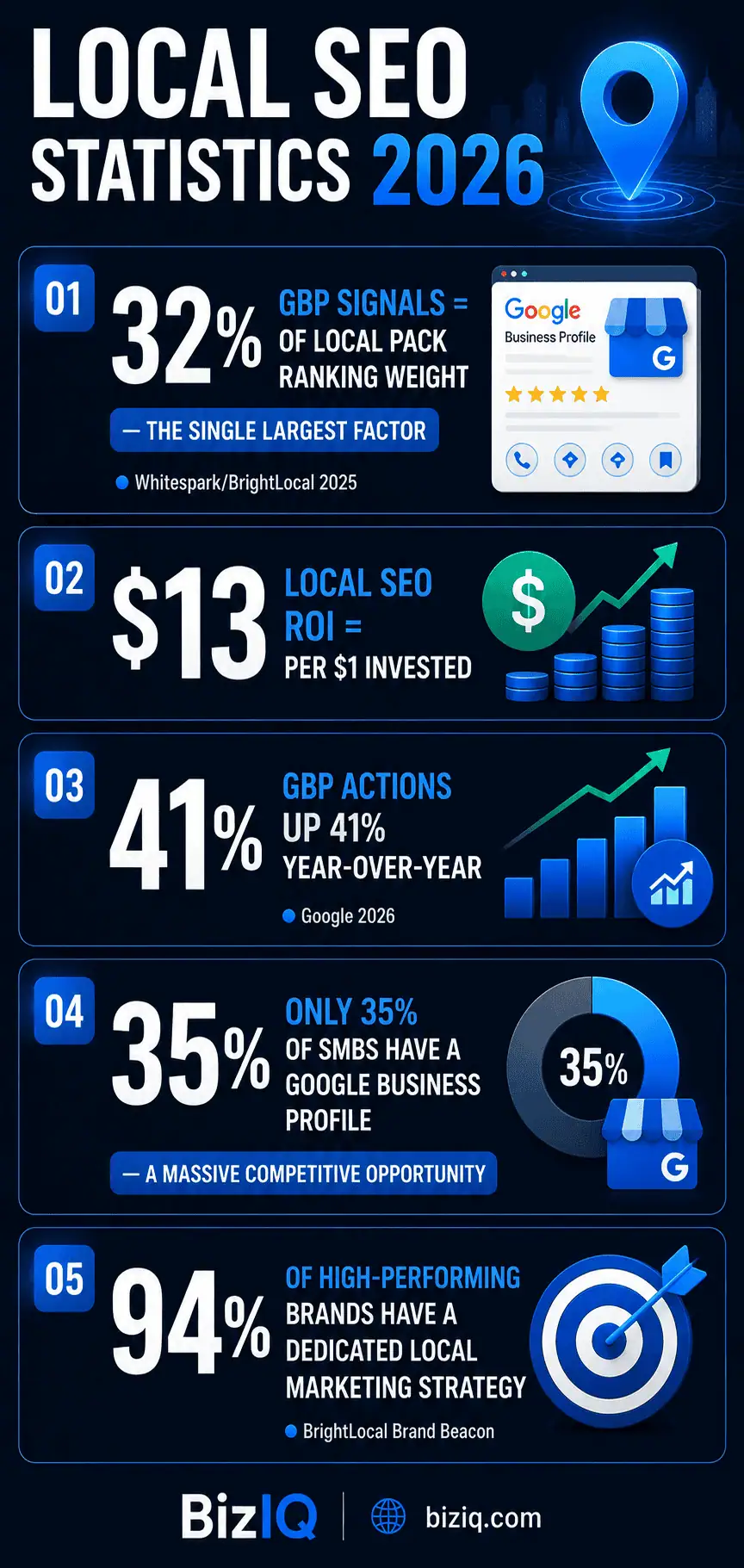
Advanced Business Profile Optimization Tactics for SEO
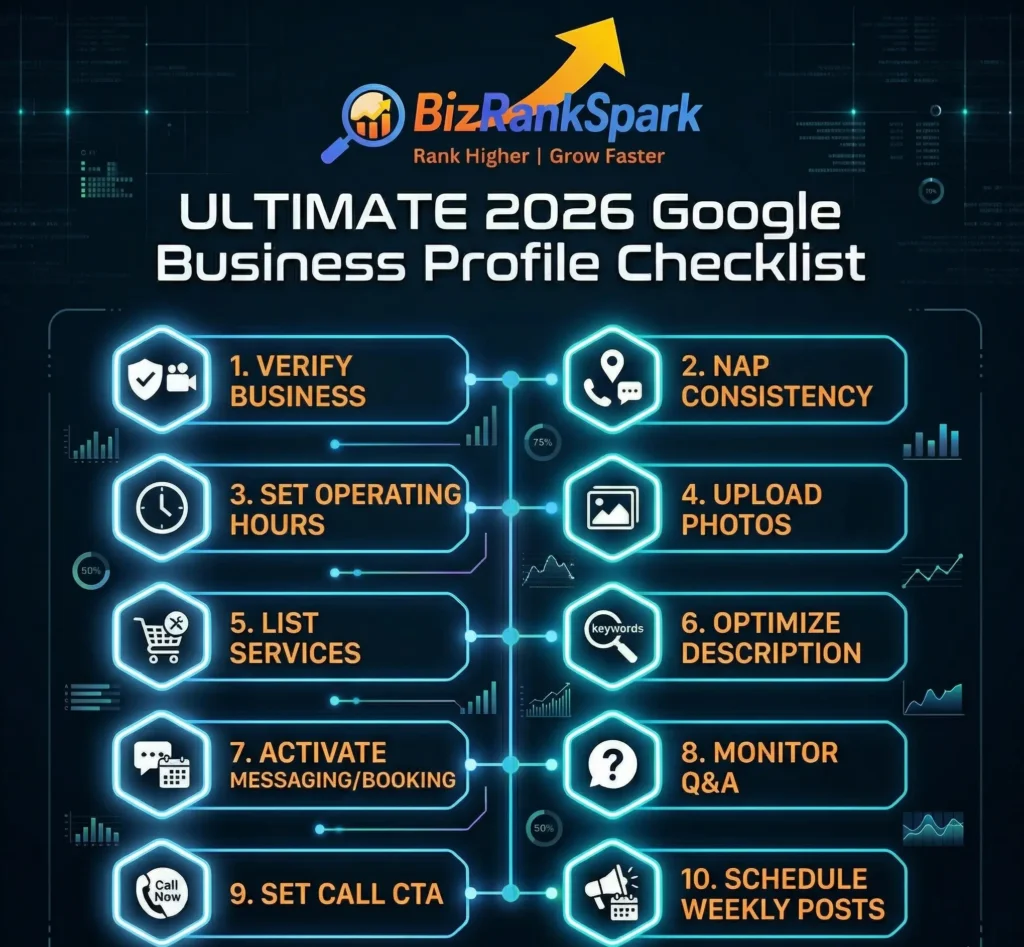
Growing Store Leads with 2026 Local SEO